
Share Sara Taber's obituary with others.
Invite friends and family to read the obituary and add memories.
Stay updated
We'll notify you when service details or new memories are added.
You're now following this obituary
We'll email you when there are updates.
Select your format and elements to print
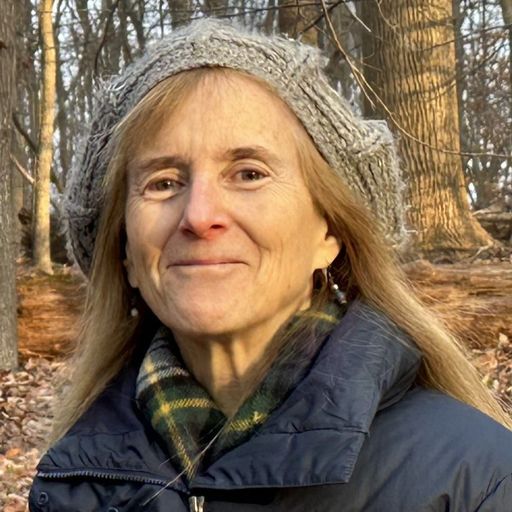
Sara Taber
Jul 26, 1954 — Feb 12, 2026
Sara Mansfield Taber passed away on February 11th at her home in Silver Spring, MD. Although she was taken from us too soon, Sara lived with an intensity and passion and work ethic that seems to have spanned many lifetimes, several careers, and countless countries.
Sara’s childhood, which was spent all over the world, particularly in Asia, led to a lifelong interest in learning about people’s lives in far flung places and cultures. Her first book Dusk on the Campo: a Journey in Patagonia, is a poetic account of the lives and philosophies of the sheep-farming families whom she and Peter (her future husband) met when they spent several years as field biologists studying whales in Patagonia in the late 70’s and early 80’s. While Peter was happy wandering along the cliffs peering out at right whale mothers and calves, Sara was fascinated by the kind and hospitable people they met in that desolate and isolated landscape. She set out each day to interview them and eventually turned her copious notes into her first book.
For her second book, Bread of Three Rivers: the Story of a French Loaf, Sara travelled to France and interviewed all the people whose work contributed to the production of a loaf of bread in a village bakery: the baker, the salt farmer, the wheat farmer, the miller, and a worker at the water company. A peak life experience for her was getting to ride along in the bread delivery van at five in the morning, bringing bread to far-flung inhabitants of Brittany.
One of her memoirs, Born Under an Assumed Name: The Memoir of a Cold War Spy’s Daughter tells her story of growing up as an American girl living in Japan, Taiwan, Borneo, the Netherlands, and the United States in the 50’s and 60’s, as well as the tale of her father’s complex and conflicted relationship with his job as a covert CIA agent. Another memoir, Black Water and Tulips: My Mother, the Spy’s Wife, explores and ultimately finds joy in her fraught relationship with her astounding and perplexing mom.
Sara also published several books on writing techniques, gleaned and generously shared from her expertise as a writing teacher and editor, including Chance Particulars: A Writer's Field Notebook for Travelers, Bloggers, Essayists, Memoirists, Novelists, Journalists, Adventurers, Naturalists, Sketchers, and Other Note-Takers and Recorders of Life.
Sara always had at least three entire books completed that she hadn’t published yet, as well as about fifty essays on topics ranging from healthcare and social programs in the US versus countries in Europe, to “How to End War” based on her intensive study of ancient Classical texts, to how her mother forced her to eat lumpy Cream of Wheat as an eight-year-old.
She always dove into every project with a breath-taking thoroughness, and she took on other people’s projects and problems with a matching dedication. Once, when she had to give a talk on “Endings in Writing,” she prepared by reading and taking exhaustive notes on the beginnings and endings of fifty great works of literature. Whenever she needed to come up with a title for a piece of writing, she wrote a list of about a hundred options and then gradually narrowed them down, consulting with friends and family members for their opinions. Anyone who came to her for advice, ideas, or editing would receive the most thorough and thoughtful consideration—Sara would take on their project as if it were her own (sometimes to the point of being overwhelming).
Sara was fiercely curious, dedicated to the pursuit of knowledge, and interested in learning about everyone. She constantly took Great Books seminars from St. John’s College as well as classes on poetry, religion, and even physics. She was an obsessive (no, it’s not too strong a word) note-taker, and always had a little notebook with her in which she would write down every bit of wisdom or book or movie recommendation from everyone she talked to. The house was always littered with index cards with little snippets of thoughts, ideas, and quotations on them—it could be quite funny to try to puzzle out what they meant out of context.
Although she never mentioned her impressive credentials, Sara had a doctorate from Harvard in human development, a masters degree in social work, and spent years as a professor of social work before becoming a full-time writer. She constantly put her training as a therapist and social worker to use as a thoughtful writing teacher, a perceptive interviewer, and a caring friend.
In every conversation she had with every person she met, Sara would seek to get to the heart of their deepest thoughts and most formative experiences and encourage them to follow their dreams. On a recent trip to France, she would stop random strangers and ask them: “How would you solve the problems of the world.” After a few moments of stunned silence, they would usually launch into an hour-long conversation.
Sara spent the past four years mentoring, and really being a second mother to, seven college-age Afghan women whom she met teaching “Writing for Friendship” groups over Zoom. She gave hope, love, understanding, and encouragement to them. She even helped two of them escape from Afghanistan when they were being sought by the Taliban for protesting, literally saving their lives.
When she started hospice care in December, Sara spent a few days devastated because she had so much left that she wanted to do. Then she spent a few intense weeks seeking and finding two new mentors for each of the Afghan girls she worked with to make sure they would still have support once she was gone.
When that was done, Sara set to work editing and finishing a years-long project of writing an epic poem giving voice to the women of Classical texts such as The Oresteia. The work is a series of powerful, passionate, and often rage-filled monologues by Cassandra, Iphigenia, Clytemnestra, Helen, and the Pythia. She used every ounce of her energy to bring that work to completion. Within days of finishing it, she could no longer hold a pen, and then within two weeks, she passed away.
Sara remained fully herself until the very end. A few days before she died, a friend came to visit, and Peter told the story of how they met at Carleton College, and how he took a class on the history of Buddhism to impress her. He realized during the final exam that he hadn’t absorbed anything from the class, and finally understood why Sara had spent the last two weeks in the library preparing, while also attending 6:00am meditations with a visiting Buddhist monk. While he was telling the story, Sara seemed to be asleep, and we weren’t sure she was listening. But then she opened her eyes and proceeded to recite the Eightfold Path from memory.
We were lucky to be able to spend Sara’s last few weeks together as a family. When she passed away, Peter was lying next to her, and her daughter and son-in-law had just sung to her an hour before while her son massaged her face like she used to do for him when he was little.
Sara always wore beautiful, autumnal clothing in unusual and exquisite color combinations, drank Bengal Spice tea, and used phrases borrowed from her childhood travels (“welte rusten”—Dutch for “sleep well”; “Hayaku Machen”—Japanese for “hurry” combined with German for “make”; and “Hail Hantonis” (sp.?)
—a phrase her Dutch house keeper would use while spinning her hands as a charm to help find parking—if anyone knows what this is, please let us know!). In her house in Silver Spring, Sara created a cozy and welcoming environment, filled with books, art, and beautiful colors, where for decades she led writing workshops including her famous “memoir club,” and hosted lovely family gatherings, often featuring devilish dump cake, apple crisp, or moelluex au chocolat. She is so missed by her husband Peter, her children Maud and Forrest and their partners, Matthew and Amanda, her grandson Robin, her brother Andy, and her friends from across the decades and around the world.
To send flowers or plant a memorial tree in memory, please visit our flower store.
Guestbook
Visits: 147
This site is protected by reCAPTCHA and the
Google Privacy Policy and Terms of Service apply.
Service map data © OpenStreetMap contributors