
Share Richard S. Palais's obituary with others.
Invite friends and family to read the obituary and add memories.
Stay updated
We'll notify you when service details or new memories are added.
You're now following this obituary
We'll email you when there are updates.
Select your format and elements to print
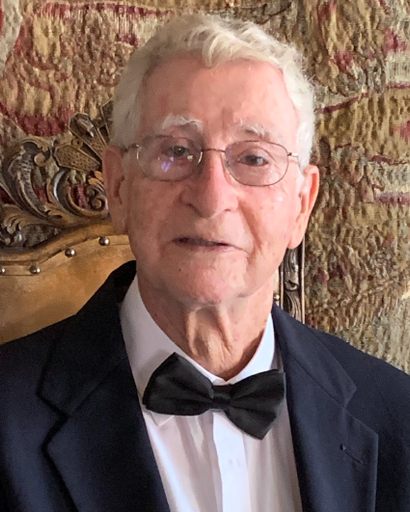
Richard S. Palais
May 22, 1931 — May 13, 2026
A life devoted to family, friendship, teaching, discovery, and the beauty of mathematics.
Richard will be remembered not only for his mathematical achievements, but also for his curiosity, generosity, kindness, humor, and unwavering enthusiasm for learning.
Richard Palais was born in Lynn, Massachusetts, on May 22, 1931, and died on May 13, 2026. Throughout his life, he remained deeply devoted to his family, taking an active interest in their lives, accomplishments, and adventures. He was Emeritus Professor of Mathematics at Brandeis University and made fundamental contributions to mathematical research, publishing, and visualization. Known affectionately as "Dick" to family, friends, colleagues, and students, Richard was a member of Harvard College's Class of 1952.
After earning his Ph.D. in mathematics from Harvard University in 1956, he held appointments at the University of Chicago and the Institute for Advanced Study before spending most of his career on the faculty of Brandeis. In 2004, he joined the University of California, Irvine, as an Adjunct Professor, where he continued to teach and mentor students well into retirement.
Richard was first married to Eleanor G. Palais, with whom he had three children: Julie, Robert, and David. Although their marriage later ended, Ellie and Dick remained close friends, connected through family and enduring mutual affection, and often reunited for dinners and other gatherings.
His second wife, Chuu-Lian Terng, was not only a mathematical collaborator but also his steadfast companion for 50 years. Together, Richard and Chuu-Lian shared a love of nature, travel, food, gardening, and classical music. They explored New England, the American West, Europe, Russia, Australia, and Asia, delighting in local cultures, cuisines, and friendships wherever they went.
Among all the places Richard loved, Paris held a special place in his heart. He first discovered the city in 1952 as a young traveling fellow and fell in love with its streets, gardens, cafes, museums, and neighborhoods. He often described himself as a flaneur - happiest wandering the city on foot, observing daily life and savoring its beauty. Over the decades, he returned many times, sharing his affection for Paris with Chuu-Lian.
Over more than half a century, Richard made foundational contributions to differential geometry, global analysis, and mathematical physics. The Mostow-Palais Theorem and Lie-Palais Theory were major advances in the theory of transformation groups. His work on the Principle of Symmetric Criticality and the Palais-Smale Condition in the calculus of variations became influential across mathematics and theoretical physics. Through his research, collaborations, books, and students, he helped shape generations of mathematical thought.
In the 1970s, Richard played a leading role in the American Mathematical Society's transition to Donald Knuth's TeX system, helping make mathematical publishing more efficient, more affordable, and more accessible for mathematicians preparing their own manuscripts. In 1979, he co-founded the TeX Users Group (TUG) and served as its first president. Later, his collaborations in mathematical visualization with Hermann Karcher and others helped transform abstract mathematical ideas into interactive computer graphics and inspired the creation of the Virtual Math Museum.
Richard's many Ph.D. students included future leaders in mathematics, computer science, and biomedical research. Among them were Karen Uhlenbeck, later awarded the Abel Prize; Leslie Lamport, recipient of the ACM Turing Award; and Jill Mesirov, a pioneer in applying machine learning to cancer genomics who went on to serve as Associate Vice Chancellor for Computational Health Sciences and Professor of Medicine at UC San Diego. Another former student, Bingle Wu, later a partner at a London hedge fund and a trustee of Brandeis University, established the Richard S. Palais Endowed Fellowship there. Many of Richard's former Ph.D. students remained close friends throughout his life.
Richard will be remembered not only for his mathematical achievements, but also for his curiosity, generosity, kindness, humor, and unwavering enthusiasm for learning. His influence lives on through his family, friends, students, colleagues, and the countless people touched by his work. Later in life, with Chuu-Lian's steadfast support, he overcame numerous health challenges and continued to live an active life well into his nineties. Until the end of his life, he cherished walks in parks and along the beach, as well as meals shared with family and friends.
Those interested in a deeper understanding of Richard's life and academic journey may wish to read the interview, "Richard Palais on his development as a young mathematician," published in the Notices of the American Mathematical Society:
Additional biographical information can be found in his Celebratio Mathematica profile:
In lieu of flowers, those who wish may make a memorial donation to Brandeis University in support of the Richard S Palais Endowed Fellowship:
https://give.brandeis.edu/campaigns/37383/donations/new?a=6925791
In Loving Memory: Richard was preceded in death by his brothers, Steven and Donald; his sister, Nancy; and his first wife, Eleanor. He is survived by his wife, Chuu-Lian Terng, and his children, Julie, Robert, and David.
Guestbook
Visits: 148
This site is protected by reCAPTCHA and the
Google Privacy Policy and Terms of Service apply.
Service map data © OpenStreetMap contributors