
Share Charles Lee Geshekter's obituary with others.
Invite friends and family to read the obituary and add memories.
Stay updated
We'll notify you when service details or new memories are added.
You're now following this obituary
We'll email you when there are updates.
Select your format and elements to print
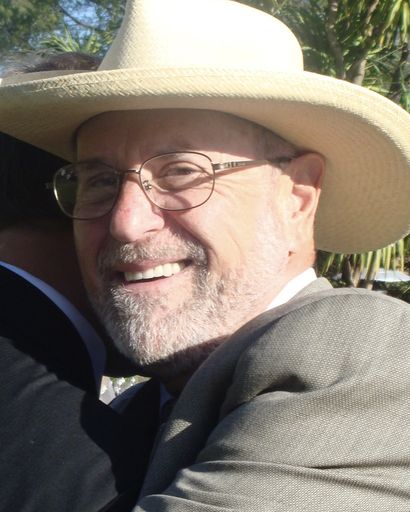
Charles Lee Geshekter
d. Jun 7, 2026
Charles Lee Geshekter, emeritus professor of African history at California State University, Chico, three-time Fulbright Scholar, Somalia specialist, and outspoken critic of what he saw as declining scholarly rigor and the rise of ideological conformity in academia, died June 7 at a nursing home in Chico, California. He was 83.
Dr. Geshekter, known to most as Charlie, was a widely published academic who traveled to Somalia extensively from the late 1970s until the government’s collapse in 1991. In 1984, he wrote and produced The Parching Winds of Somalia, a documentary exploring the country’s history, culture, camel trade, and long fight against European colonialism. The film closes by describing the Somali people as fiercely independent, beholden to no one, and possessed of an unbreakable spirit. Those same words could be used to describe Charlie.
Little in Charlie’s childhood would foreshadow his academic career and endless interest in the Horn of Africa. Born to Rose Wolfe and Albert Geshekter in 1943, he was raised in an Orthodox Jewish home in Baltimore’s Forest Park neighborhood, where they kept kosher and attended shul at Beth Tfiloh.
Perhaps Charlie’s intellectual curiosity was inspired by Rose, a devoted teacher who instilled a love of vigorous reading at an early age. Or perhaps it grew from watching his father spend endless hours at his grandfather’s clothing store, Max’s for Maximum Value. His late father, Albert, had hoped to become a chemist but joined the family business during the Depression. When Max died unexpectedly at the store in 1958, Albert was left to carry the weight of a business he never wanted. Maybe Charlie’s ambition sprang from seeing that reality and wanting a life well beyond selling schmattas to steelworkers on Eastern Avenue.
Charlie’s boyhood was filled with stickball, stepball, and touch football, usually with his Powhatan Avenue friends Ross, Jimmy, Jeff, Johnny, and Artie. Charlie’s beloved little sister, Ruthie, was always there too, ready to catch a ball or take a tackle. The kids rode their bikes everywhere, often to the library, competing with odometers they’d attached to their bikes to see who was doing the most riding. On rainy days, when they couldn’t ride, they would prop their bikes upright on the front porch and spin the wheels to see who could still go the farthest. When they figured out how to ride the Baltimore City Transit, they went everywhere the buses or streetcars could take them.
Charlie and his friends collected autographs jammed alongside the crowds of fans at Memorial Stadium, where the team buses dropped off the players. One day, Charlie made a simple observation: “All these buses have to come from somewhere.” After asking the drivers where the teams stayed, the boys began taking the #32 city bus to the Hotel Lord Baltimore – or the Belvedere when the Yankees were in town – to collect signatures in peace and quiet away from the other fans. Soon enough they had autographs from stars like Mickey Mantle, Whitey Ford, Bob Purkey, and Willie Mays.
No matter where life would take him, Charlie never lost his Baltimore accent or his loyalty to his hometown teams: the Colts, later the Ravens, and always the Orioles. He was known for relentlessly ringing a cowbell during games.
After graduating from Baltimore City College, he left for the University of Richmond, where two life-changing events happened. First, at a Phi Sigma Delta fraternity party, he met a spitfire strawberry blonde from Virginia Beach. He reportedly invited her to a “real shit stomper.” She playfully replied that she liked to “stomp shit.” Susanne Clark would become his first wife for 23 years and the mother of his sons, Marc and Eric. Second, he discovered he loved teaching.
As a college student at the height of the Civil Rights Movement, Charlie asked a professor questions about African history. The professor had nearly no knowledge of the subject, but he recognized Charlie’s intellectual curiosity and offered him an opportunity to prepare several lectures as his senior project. It was at this point that his research and love for African history began.
Charlie’s Richmond professor suggested he continue his studies at Howard University in Washington, D.C., where he eventually earned both a master’s degree and many colorful stories from his D.C. commute, sitting at bus stops practicing his Swahili in some of the city’s grittier neighborhoods in the late 1960s.
Charlie loved Howard but went on to pursue a PhD from UCLA after a mentor advised his ability to support a family would be better from what was considered a more prestigious university. A few months before receiving his PhD from UCLA, he interviewed at CSU, Chico and accepted what would be his first and last teaching position.
Charlie was the first—and only—professor of African history at Chico State, where he taught for nearly 40 years. When he retired in 2007, the African history program ended too. He was beloved by his students and took pride in mentoring them and making history exciting.
After retirement, Charlie's intellectual intensity would continue. He grew to be a tireless critic of the identity politics that he believed were increasingly shaping California's university system.
Charlie’s second wife of 10 years, Barbara Overhoff Geshekter, described him in a way that is relatable to many who knew him. “He was a truly unique human being. He was brilliant and prickly, insightful, and forever inquisitive. He was fervent, stubborn, tender, and could be unforgiving.”
Where his pointed intellect could draw ire in the college town of Chico, he was welcomed in distant places. Traveling to Somalia over ten times, winning over imams, and being allowed inside insular Muslim circles was an honor for a guy who grew up as an Orthodox Jew. In one Wall Street Journal article in which he defended himself against accusations of being a foe to diversity, Charlie recounted a moment while working on his documentary where he sought access to the inside of a Mogadishu mosque.
“The imam there, Sheikh Aden, insisted that I guarantee my crew would behave in a ‘worshipful manner’ during filming. A practical scholar and revered community leader, Sheikh Aden knew I was Jewish.
After I led my crew in chanting the Muslim profession of the faith (shahada) in his office, I recall Sheikh Aden telling me: ‘I know who you are, Geshekter. I wish you were a Muslim of the heart. But you are just a Muslim of the mouth. That’s good enough.’”
Charlie’s words were not always so accepted back home.
If anything, Charlie believed in nuance and rigorous debate. Much of what others considered settled was totally unsettling for Charlie. Critical Race Theory struck him as too binary, reducing people to two groups: oppressors and the oppressed. Western views of AIDS in Africa seemed similarly simplistic. Charlie, who once served as a member of the South African AIDS Presidential Advisory Panel, believed socioeconomic factors played a far greater role in AIDS statistical data than was commonly acknowledged.
The African history professor loved parables, often including them in his writings:
“Finally, an old parable has it that a man on his way to town met Fear and Plague. They said they were on their way to a city to kill 10,000 people. The man asked Plague if he would do all the work? Plague smiled and said, ‘No, I’ll take care of only a few hundred. I’ll let my friend Fear do the rest.’”
From the earliest days of COVID-19, Charlie questioned the shutdowns. He saw much of the public response as fear-driven, unsupported by sufficient data, and believed the lockdowns caused significant harm. He regarded reported COVID-19 death rates as a statistical sleight of hand. When required to wear a mask in public, he protested by writing "this thing is useless" across the front of his N95 with a Sharpie.
Charlie resisted dogma and any single way of thinking. Sometimes he did not know where to draw the line. At times, making his point cost him friendships—usually temporarily, but not always.
Where Charlie could not hold back with his colleagues, in time and with age he learned to be over-the-top-tender to those he loved most. His “sweetheart” of 22 years, Yvonne Hilde, who he met through friends in the Chico cycling community, where they competed in Jack and Jill races and the Chico Wildflower, describes being in love with a “dear, sweet, tender” man. As Charlie declined, Yvonne never left his side. Her grandchildren considered Charlie, or “Cawdie,” as he was called, their very own.
Charlie’s own sons, Marc and Eric, can attest to the superlatives, adoration, and nicknames that he showered upon his five grandchildren, who he regarded as his “precious superfine angel babies” who were “a tonic and lift in every possible way.” Charlie would grow weepy and his “heart would skip a beat” on every phone call just to say hello or to hear an update about school or whatever activities his grandkids were doing. He loved sending riddles, explaining his favorite Yiddish words, or showing up in their classrooms to read stories, always with a big smile on his face and a mischievous twinkle in his eyes.
The Charlie that Marc and Eric grew up with felt closer to his stricter Orthodox roots, where the forever professor would mark up their homework with a red pen. Later in life, the only marking being done was to embellish the greeting cards he loved to personalize for his grandchildren.
When Charlie had mostly retired from stoking fires, pushing buttons, and getting under people’s skin, he loved traveling back east, back to his roots, to go see an O’s game, to remember the greats like Brooks Robinson, to ring the cowbell, to crack crabs, and to visit with old friends.
When advanced Parkinson’s began taking its toll on him, joy for Charlie, who felt like Larry David for much of his life, came from recounting a favorite episode of Seinfeld or Curb Your Enthusiasm. He mostly loved just being with Yvonne, sitting in the house, in the quiet, together. He loved phone calls with “Sister Ruthie,” catching up and reminiscing about their idyllic childhood on Powhatan Avenue or trying to figure out how to manage his “Somali Cholly” Fantasy Baseball team.
The end of Charlie’s suffering brings great sadness and some relief to his loving family, his lifelong friends, and perhaps even the Editor of the Chico Enterprise Record who was the recipient of countless letters raging against COVID-19 data, “draconian” mask mandates, and the city council.
Charlie Geshekter, with his endless intellect, his line crossing, his unbreakable spirit, and his deep love for his family and friends will be forever missed.
Charlie is survived by his sons, Marc Geshekter (Kristin Bradway) and Eric Geshekter (Lily Buerkle); his grandchildren, Madison, Cameron, and Ariella Geshekter, children of Marc, and Rose and Mae Geshekter, children of Eric; his sister, Ruth Geshekter Millward (Peter Millward); his longtime sweetheart, Yvonne Hilde; Yvonne's daughter, Julie Granrud (Eric Granrud); and Yvonne's grandsons, Michael and Jack Granrud as well as countless friends.
Charlie will be buried alongside his parents in Beth Tfiloh Cemetery in Baltimore. In lieu of flowers, donations may be made to Congregation Beth Israel in Chico, California.
To send flowers or plant a memorial tree in memory, please visit our flower store.
Guestbook
Visits: 449
This site is protected by reCAPTCHA and the
Google Privacy Policy and Terms of Service apply.
Service map data © OpenStreetMap contributors