
Share John E. Cook's obituary with others.
Invite friends and family to read the obituary and add memories.
Stay updated
We'll notify you when service details or new memories are added.
You're now following this obituary
We'll email you when there are updates.
Select your format and elements to print
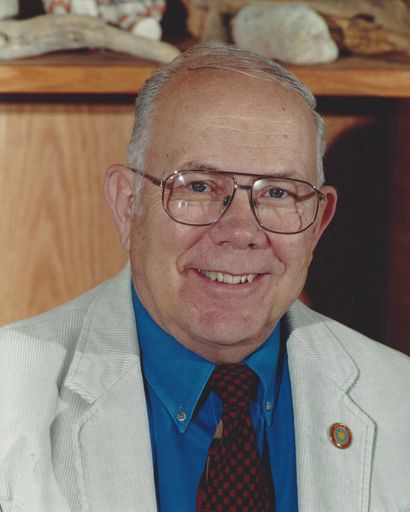
John E. Cook
Mar 29, 1936 — Jul 3, 2026
John E. Cook, National Park Service leader and lifelong public servant, died peacefully at home in Kingsport, Tennessee on July 3, 2026. He was 90.
By rights, John E. Cook, a 3rd generation National Park Service (NPS) employee, should have been born at Grand Canyon National Park. His father John O. Cook, a 2nd generation Grand Canyon employee whose father had worked there too, was a maintenance worker and lived at the Canyon with his wife Bernice “Bee” Cook. Unfortunately, when Bee’s delivery began, the doctor at Grand Canyon Village was too drunk to help, so John E. was born in nearby Williams, Arizona. It was the beginning of a long life spent in and near national parks across the country until his death in Kingsport, Tennessee, not far from Great Smoky Mountains National Park.
John and his younger brother Theodore “Tee” grew up at Grand Canyon, frightening tourists by pretending to jump over the railing at the South Rim and into the abyss below. They recounted summer birthday parties and sledding in winter. It was a great place to be a kid.
The family moved to Camp Verde, Arizona when John O. was promoted to superintendent of Montezuma Castle National Monument. John E. graduated from Camp Verde High School and attended Northern Arizona University, graduating with a B.S. in Business Administration. To pay for school, John became a bareback bull rider on a regional rodeo circuit. He took some big spills and had a lifelong limp to prove it. During summers, he began his own career, working seasonally for the NPS, including a stint as a “muleskinner” at Saguaro National Monument and laborer at Walnut Canyon National Monument.
After graduating from NAU, he married Marjorie “Dani” Guillet, who had also grown up in the NPS. Like John’s dad, Dani’s father, Meredith Guillet, was a park superintendent. John and Dani knew each other growing up but fell in love at college. Their first home together was a little trailer at Chaco Canyon National Monument (now Chaco Culture National Historical Park) in New Mexico. Their next park assignment was at Navajo National Monument. They moved frequently over the next 40 years.
Following two years of honorable service in the United States Army from 1959 to 1961, John’s remarkable career with the National Park Service really took off. Every year or two he was tapped for yet another assignment and rose quickly through the ranks. By age 30 he was a superintendent, by age 36 a deputy regional director, and by age 37 an associate director of the National Park Service in Washington, D.C. In the early years, John and Dani had two children, Kayci and Lafe, who became used to moving, changing schools and making new friends.
John’s NPS positions included superintendencies in Arizona at Canyon de Chelly National Monument, Hubbell Trading Post National Historic Site, the Navajo Lands Group, Southern Arizona Lands Office, and later, Great Smoky Mountains National Park in Tennessee. Central office positions included Deputy Regional Director, Western Region in San Francisco; Associate Director for Operations, Washington, D.C.; Regional Director, Southwest Region (twice) in Santa Fe; Regional Director, Alaska Region; and his final assignment as Regional Director, Intermountain Region, in Denver.
John's favorite assignment was when he was sent to Alaska in 1980 to lead NPS implementation of the Alaska National Interest Lands Conservation Act (ANILCA). As the first National Park Service Regional Director charged with overseeing the vast expansion of parklands designated by the legislation, he guided the Service through one of the most significant conservation initiatives in the nation's history. It was not an easy assignment. Many Alaska residents and elected officials opposed ANILCA. John’s success there can be attributed to his political savvy, deft negotiating skills, a willingness to meet locals in their communities, and an ever-present bottle of whiskey, brought to lubricate hard conversations.
Throughout his career, John maintained strong relationships with presidential administrations, members of Congress, and governors on both sides of the aisle, including Secretaries of the Interior Stewart Udall, Manuel Lujan, and Bruce Babbitt, Senators Craig Thomas (WY) and Pete Domenici (NM), Congressman Bill Richardson (NM), and Governors Jerry Apodaca (NM) and Lamar Alexander (TN). Through these relationships and others, John helped expand the National Park System to include new units such as Petroglyph and El Malpais National Monuments, San Antonio Missions National Historical Park, Washita National Battlefield, Palo Alto Battlefield National Historic Site, and the Santa Fe and Trail of Tears National Historic Trails. He also advocated for the official name change of Little Bighorn Battlefield National Monument from Custer Battlefield National Monument to honor the full scope of the battle. These units recognized previously overlooked aspects of the nation’s history and expanded the relevance of the National Park System to more Americans.
John’s expertise in creating and managing protected areas was sought by other countries. International trips were coordinated through the NPS and US Department of State and included visits to Japan, Spain, Jordan, Tunisia, Saudi Arabia and Australia where he advised nations on natural and cultural site preservation and sustainable tourism.
While John’s most obvious career impacts were preserving and protecting America’s national parks for current and future generations, they were amplified and extended through his mentorship of generations of NPS employees over his long career. He recognized talent and potential and created development opportunities for people who later became program managers, superintendents, and regional directors and served throughout the agency. He challenged employees to do their best and inspired loyalty to the agency and its mission.
For the combination of accomplishments noted above, John received numerous awards. He received the Department of the Interior Meritorious Service and Distinguished Service awards. The American Scenic and Historic Preservation Society recognized him with the Cornelius Amery Pugsley Medal for outstanding leadership in scenic preservation at the national level. But his most treasured recognition came in the form of an Honorary Doctorate of Humane Letters from his alma mater, Northern Arizona University.
When John retired in 1999 with 43 years of federal service he wasn’t done, either with working or public service. He served several terms on the board of Eastern National Parks Association, a non-profit educational support organization for over 150 NPS sites. After moving to Page, Arizona, next to Glen Canyon National Recreation Area, John became a city councilman and vice mayor, and, finally, a relief magistrate. He loved the fact that he could say he had worked for all three branches of government: executive, legislative and judicial. Although a workaholic, John managed to squeeze in fishing trips on Lake Powell and hunting trips to Montana and Wyoming. Visitors to his home in Page were treated (or subjected) to elk and pronghorn steaks or ceviche made with striped bass.
John inspired his own children to pursue careers in public service. His daughter Kayci Cook Collins followed his lead and became the first 4th generation NPS employee in 1982. She is about to wrap up her own 43-year career and will retire as Superintendent of Mesa Verde National Park and Yucca House National Monument in Colorado. Son Lafe Cook has pursued a life in public service through teaching at public schools for over 30 years. He is the highly accomplished band director at Dobyns Bennet High School in Kingsport, Tennessee. Kayci and Lafe each have children who were influenced by their grandfather’s love and guidance: Sean Collins, and Kennon, Morgan, and Piper Cook.
John will be buried in Camp Verde, Arizona. An Arizona celebration of life will be scheduled in the coming months. Condolences can be sent to Kayci Cook Collins at Mesa Verde National Park, PO Box 8, Mesa Verde CO 81330 and to Lafe Cook at Dobyns-Bennett High School, 1 Tribe Way, Kingsport, TN 37664. Memorial contributions in John’s name can be made to the following organizations:
Mesa Verde Foundation www.mesaverdefoundation.org
Dobyns-Bennett High School Band John E. Cook Memorial Fund, PO Box 7265 Kingsport, TN 37664.
Carter-Trent Funeral Home in Kingsport is serving the Cook family.
To send flowers with our preferred florist or plant a memorial tree, please visit our flower store.
Guestbook
Visits: 445
This site is protected by reCAPTCHA and the
Google Privacy Policy and Terms of Service apply.
Service map data © OpenStreetMap contributors