
Share Norma Widic Carlson's obituary with others.
Invite friends and family to read the obituary and add memories.
Stay updated
We'll notify you when service details or new memories are added.
You're now following this obituary
We'll email you when there are updates.
Select your format and elements to print
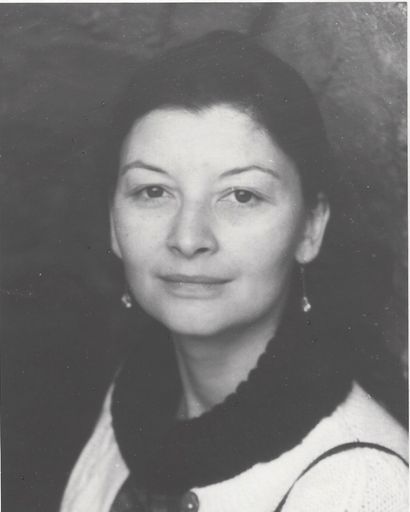
Norma Widic Carlson
Nov 29, 1931 — Aug 23, 2026
NORMA WIDIC CARLSON, labor economist, student of worker self-management, college teacher, and research partner with her husband, died peacefully in her sleep in Silver Spring, MD, August 23, 2026, after a long illness. She was 94.
The youngest of the five children of Elias C. Widic and Mary Lukan, Norma was born at home on the Widic farm in Friendship, MD, near Berlin, in Worcester County. Elias and Mary emigrated separately to the U.S. from Slovenia in the early 1900s, living first in small towns in western Pennsylvania. Elias found work mining bituminous coal in one of the mines that dotted the region. He met Mary around 1910; she was already part of the rising Slovenian community moving into this area. They married soon after meeting and started building a family: Frank 1911; Mary 1913; Louise 1915; Florence 1923. Norma was born November 29, 1931.
Elias had realized a crucial goal in 1923: He used his savings to buy an 80-acre property on the Eastern Shore of Maryland, near Berlin. The Widic family established a thriving farm that grew vegetables and fruits as well as field corn (chickens were added later to the lineup). Norma loved the farm. She recalled the feeling of peace she had at dusk when eastern-shore breezes rustled the corn stalks in the fields. Along with her siblings, she worked on the farm weeding corn and helping in the hayloft of the barn built by her father. She also tended to the farm stock, instilling in her a love of animals (she later contributed to many animal causes).
Norma also did well in school. She skipped two grades in elementary school, and in 1947, at age 15, graduated from Buckingham High School, where she was awarded the school’s esteemed “Old Home Prize” for academic excellence. But Norma was never one for sticking to old routines. After high school, no longer tied to the farm, Norma joined the regular workforce, taking a job as a legal secretary in a Berlin law firm.
After four years she surprised her family when she decided to leave the Eastern Shore, then an isolated section of Maryland (there was not yet a Chesapeake Bay Bridge). She made the “leap,” crossing the Bay by the only means readily available, the Annapolis-Kent Island Ferry. She had negotiated a position for herself as secretary in the trust department of the Baltimore National bank.
Next she realized another aspiration: In 1955, at age 23, she enrolled in Goucher College, a women’s college in Towson, MD (it is now coeducational). Norma pursued economics and international relations as a joint major. She thought with a background in economics she would always have a job. But she had another reason to tackle that subject: because it was hard, she later told her husband. She graduated from Goucher in 1960 with an A.B. and grades that led to membership in Phi Beta Kappa, the academic honor society. She then began graduate studies at Vanderbilt University. But now, Norma questioned her career choice. Though she knew she needed to master a discipline, she realized she had an even greater need to be a mentor— “to work directly with individuals, as well as ideas,” as she put it.
So Norma broke away again and took an unlikely detour, accepting a position with the Central Intelligence Agency (CIA), in a branch that today would be called the Directorate of Analysis. It was a decision she regretted. She disliked the place from the get-go and would work there no more than a year. By 1963, she was back in academia, teaching economic theory and economic history at Prince Georges Community College, then in Suitland, MD. “This experience erased all doubts in my mind that I was a teacher,” she said.
It was during this period that she met her future husband, Elliot, who found Norma amazing; he took her to restaurants just to experience the joy of hearing her talk. They were soon engaged. Neither Elliot nor Norma were Catholics, but, on March 26, 1966, they were married at St. Ignatius Church, in Baltimore. The ceremony was officiated by a Jesuit priest whom Norma had met years earlier.
Joining Elliot in Philadelphia (where he was a newspaper reporter), Norma continued to balance her academic and mentoring interests. She worked briefly as an economist for the City of Philadelphia and then for Jewish Employment and Vocational Service. She helped design a program that trained and found jobs for high school students with emotional handicaps. Wanting to complete her graduate studies, she enrolled in the University of Pennsylvania where she applied her expertise in economics to questions of how economic change affects the lives of ordinary men and women. I
n 1969, Penn awarded her an A.B.D. (later an M.A.), in economic history. In 1972, Penn granted her a Fulbright/IREX stipend to study worker self-management in Yugoslavia—the scheme developed by Yugoslav President Josip Broz Tito to give workers a greater role in enterprise decision-making.
The Fulbright program directed Norma to Belgrade, the capital of Serbia, then the capital of Yugoslavia, a federation of six republics. One was Slovenia, the ancestral home of her parents. Norma did visit Slovenia, but her Fulbright priorities ruled out a search for Widic or Lukan family members. The grant financed a year in Belgrade. Norma and Elliot stayed for two (he had quit his newspaper job). Her mission was complicated. The pair arrived just as Tito’s government was cracking down on western influences in Yugoslavia and the country became less inviting to western scholars. Still, the two were able to travel the country and interviewed cooperative tradeunion representatives, workers, and enterprise managers, including several from two Slovenian enterprises (they were pleased to find a cooperating enterprise in Slovenia’s breath-taking Alps).
Norma learned much about worker-manager relations in Yugoslavia and met many fascinating and helpful people. Norma would have liked to shape her material into a dissertation, but the labor-market realities she had foreseen at Goucher—the need to earn a living—held her back. Family finances had become strained.
Returning to the U.S., Elliot joined a Washington-based service organization as a writer/editor. Norma connected with the Bureau of Labor Statistics, where she would remain 17 years as a senior economist. She liked the job because it wasn’t just statistics: she helped create a program that gave the public access to detailed information about hazardous industries and occupations. The BLS presented her with an Eminent Achievement award.
Having made a career of breaking away, she did so yet again, this time to pursue a longtime goal that had gotten lost in the shuffle. She enrolled in a program established to prepare students for careers in professional counseling, conducted by the American School of Professional Psychology/Virginia campus (ASPP). As part of her program she served an internship at the Whitman-Walker Clinic in Washington, D.C., a nonprofit health center specializing in HIV/AIDS care. She worked directly with individuals, counseling clients and giving them the kind of support that would make them more competitive in the job market. ASPP awarded Norma an M.A in professional counseling in October 2001.
But Norma did not pursue a career in counseling. At age 70, she felt she needed a breather. She stayed at home three years, but that didn’t last. In 2004, Elliot retired and promptly started work on a biography of a WWII U.S. Navy codebreaker. As they did in Yugoslavia, the two worked together traveling around the country. They interviewed retired officers, family members of WWII vets, and church officials—all people who remembered, or had knowledge of, Elliot’s subject. They ventured to Boulder, CO; Laramie, WY; Dayton, OH; Newport Beach, CA; and Pearl Harbor. There they were granted a tour of their subject’s work area. Elliot recalled this time as one of the most satisfying of their marriage: the two working side-by-side, for five years.
By 2020 Norma began to have serious health problems. She never fully recovered from shoulder replacement surgery in January of that year (her fifth joint replacement). Her cardiologist believed she suffered a small undiagnosed heart attack during that surgery. Early in 2021, he diagnosed her with congestive heart failure. Her health continued to decline, although with the help of caregivers, therapists, and visiting nurses, she was able to remain in the home she loved until just days before her death. In August, she was admitted to an assisted living facility in Silver Spring.
Norma is survived by husband Elliot; a nephew, retired Air Force Lt. Col. Frank A. Widic Jr., and his wife Maureen, of Fredericksburg, VA; and a niece, Mary Widic, of Little River, SC. Those wishing to make a gift in Norma’s memory are invited to contribute to Shepherd’s Table or to So Others Might Eat (SOME).
To send flowers or plant a memorial tree in memory, please visit our flower store.
Guestbook
Visits: 19
This site is protected by reCAPTCHA and the
Google Privacy Policy and Terms of Service apply.
Service map data © OpenStreetMap contributors